
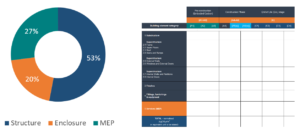
MEP systems are a major embodied‑carbon contributor (commonly cited around 27% of product‑stage embodied carbon) but are still frequently omitted or under‑counted in building sustainability reports. This omission creates a material blind spot that undermines whole‑life carbon targets and procurement decisions.
Evidence and scale
- MEP can represent approximately 27% of product‑stage embodied carbon and a much larger share of whole‑life carbon when maintenance, replacements and refrigerant leakage are included. This is documented in recent industry guidance focused on MEP whole‑life carbon.
- Historically many LCAs either excluded MEP or used coarse placeholders, which underestimates total embodied emissions and hides opportunities for reduction.
Why MEP is often missing from reporting
- Data gaps and granularity: MEP components are numerous (pumps, chillers, ductwork, wiring, piping) and many manufacturers lack verified EPDs or TM65‑aligned data.
- Methodological complexity: Whole‑life modelling must include A1–A5 plus B (in‑use, maintenance, refrigerant leakage) and C (end‑of‑life) modules; many reporting frameworks focus only on A1–A5.
- Responsibility split: MEP is often the responsibility of specialist consultants or contractors who are not integrated into early sustainability reporting workflows.
Risks of excluding MEP from sustainability reports
- Understated embodied carbon totals and misleading progress toward net‑zero goals.
- Missed decarbonisation levers (material choices, equipment selection, refrigerant strategy, service life optimisation).
- Regulatory and procurement exposure as jurisdictions move toward mandatory whole‑life carbon limits and verified data requirements.
Practical steps to fix the blind spot
- Expand LCA scope to A1–C4 and explicitly include MEP line items. Use the MEP 2040 guide for take-offs and modelling methods.
- Require verified manufacturer data (CIBSE TM65 or EPDs) for major MEP equipment in procurement.
- Integrate MEP consultants into early-stage carbon reporting and set MEP‑specific targets (e.g., % reduction vs benchmark).
- Use software and templates that capture MEP quantities and life‑cycle modules (the MEP 2040 data template is a practical starting point).
- Report uncertainty and assumptions transparently and track replacements, refrigerant GWP and maintenance cycles over the building life.
Ignoring MEP carbon is not an option, recent guidance and verification standards make it feasible to measure and report MEP whole‑life carbon, and doing so is essential to credible net‑zero claims and resilient procurement.
Aquvis EPD data can support MEP embodied carbon
With our methodology we capture material data and emissions aligned with RICS MEP Elements from 5.1 Sanitary installations to 5.13 Specialist installations. We have a comprehensive set of EPD’s that cover the most common Mechanical and Electrical manufacturers.
The impact of MEP systems carbon is considerably greater than the structure and enclosure combined and has largely been absent from embodied carbon assessments.
The aquvis solution includes the MEP embodied carbon captured from materials during the build phase using manufacturers EPD data where available. This ensures MEP carbon data is not missed and sustainability reporting is more accurately reflective of the actual carbon emissions of the built asset.
Contact us and talk to our carbon experts to identify opportunities to capture your MEP embodied carbon.